











Human Organoid-based ADC Evaluation Services

Patient-derived human organoid solution for comprehensive ADC efficacy and safety evaluation

Move beyond conventional 2D cell lines and animal models.

Using patient-derived human organoids, we provide clinically relevant evaluation of ADC efficacy, tumor selectivity, mechanism of action, and safety to support confident preclinical decision-making.

Why Human Organoids Are Essential for ADC Development

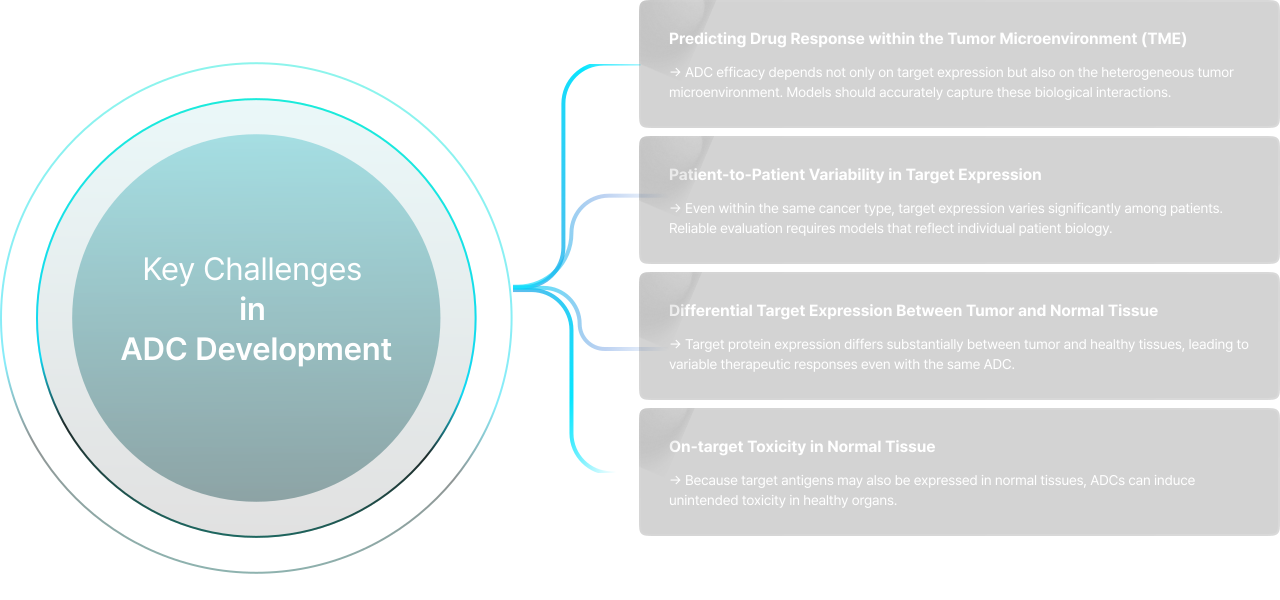
Conventional preclinical models are not enough for accurate ADC evaluation.

Conventional 2D Cell Models

Abstract teal circular arcs forming a partial ring on a black background.

Conventional 2D Cell Models

Animal Models

Why Choose logo?

Our ADC evaluation platform is powered by over 3,500 patient-derived organoid lines and advanced TME co-culture models, providing human-relevant data for more predictive preclinical evaluation.

Patient-derived Organoid Lines
0 +
Cancer Types
0 +
Driver Gene Variants
0 +
Immune Co-culture Models
0 +

Patient-derived Human Organoid Solution for ADC Evaluation

Comprehensive evaluation of target expression, efficacy, safety, and tumor selectivity to accelerate next-generation ADC development.

Patient-derived tumor organoids covering major ADC target indications

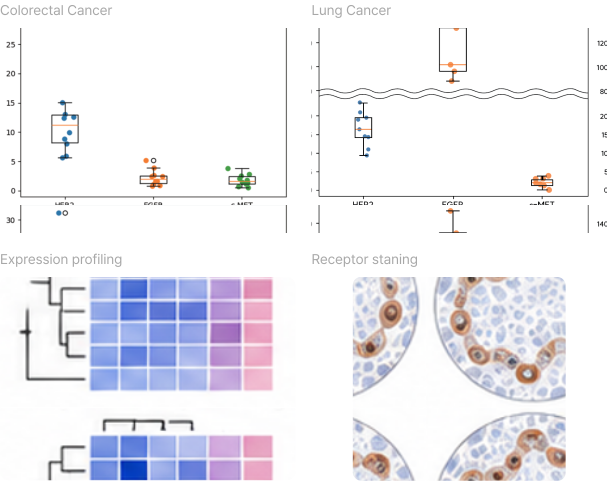
Visualize and quantify target expression and ADC distribution using Spatial Biology

Organ-specific safety assessment using normal human organoids

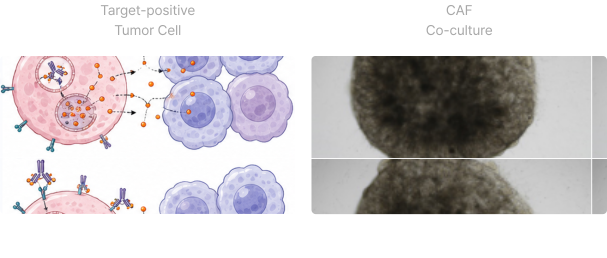
TME co-culture models to evaluate ADC penetration, immune interactions, and antitumor activity

Comprehensive Organoid Models for ADC Evaluation

Cancer Organoids

Normal Organoids

Tumor Microenvironment (TME)

Additional Analysis Services

Comprehensive ADC Evaluation Workflow

From target expression profiling to efficacy, mechanism of action (MOA), and normal tissue safety evaluation, evaluate ADC candidates through a single integrated human organoid platform.

Model Selection & Stratification

Model Selection & Stratification

✓ Tumor organoid selection

✓ Normal organoid selection

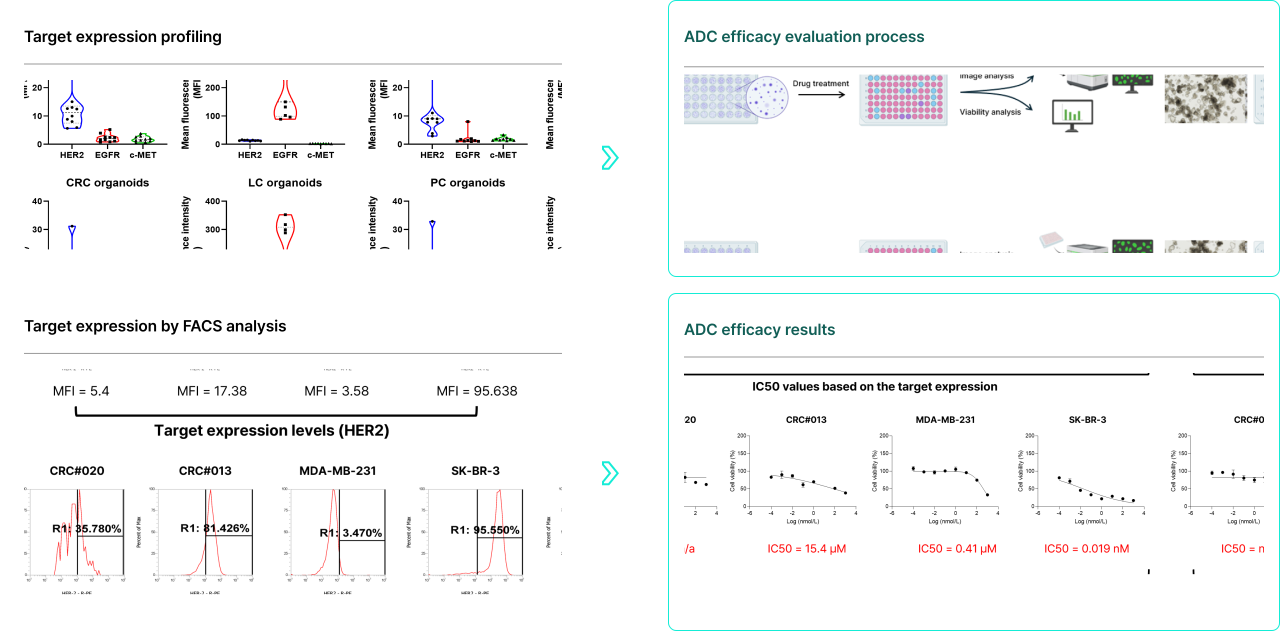
  • Stratify organoid models based on target expression levels (High / Medium / Low)
  • Pre-validation of expression profiles using FACS analysis

Tumor Organoid Efficacy Evaluation

✓ Target Engagement & Internalization

  • ADC internalization
  • ADC binding capacity

✓ Functional Efficacy Assessment

  • IC50 analysis
  • Relative viability

✓ Mechanism of Action (MOA) Analysis

  • Payload-mediated cell death
  • Imaging-based intracellular trafficking

Mechanism of Action (MOA) Analysis

✓ ADC Target Binding Analysis

  • Target Engagement
  • Binding Capacity

✓ Intracellular Transport Analysis

  • Internalization
  • Payload Release

✓ Cell Death Mechanism Analysis

  • Payload-mediated Cytotoxicity
  • Intracellular Trafficking

Normal Organoid Safety Evaluation

✓ Normal Tissue Safety Assessment

  • Intestine, liver, lung, and other normal organoids

✓ Tissue-specific Toxicity Assessment

  • Toxicity analysis using normal human organoids
  • Comparative safety assessment between tumor and normal tissues

Bystander Effect Evaluation

✓ Assessment of Neighboring Cell Response

  • Payload diffusion analysis
  • Bystander cell killing effect

✓ Tumor Microenvironment (TME) Modeling

  • CAF
  • Immune cells
  • Co-culture models

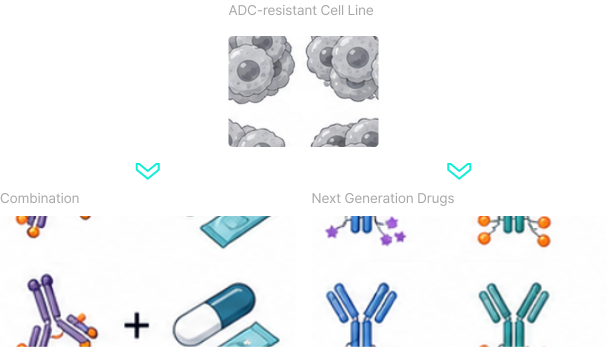
ADC Resistance Model Development

✓ Development of ADC-resistant Models

  • Establishment of resistance models through repeated treatment
  • Platform for evaluating next-generation ADCs

✓ Combination Therapy Evaluation

  • Combination treatment assessment
  • Comparative evaluation of next-generation ADC candidates

Representative Results

ADC efficacy evaluation results

Actionable Insights

Provides key insights to more accurately predict the efficacy and safety of ADC candidate substances.

Tumor Selectivity

Expression-driven Tumor Selectivity

Mechanism of Action

On-target toxicity in normal tissues Organ-specific toxicity signatures Safety margin assessment

Normal Tissue Safety

Tumor efficacy maintained / Normal toxicity minimized Comparative evaluation across ADCs Response prediction (large datasets)

Therapeutic Window Definition

On-target toxicity in normal tissues Organ-specific toxicity signatures Safety margin assessment

Accelerate Your ADC Development with Human Organoids

Submit your request today to receive a customized quote for ORGANOIDSCIENCES’ advanced organoid solutions.

ORGANOIDSCIENCES

If you have any inquiries about ORGANOIDSCIENCES’ solutions, research collaborations, or partnership opportunities, please leave us a message.
Our team will review your inquiry and connect you with the appropriate expert.